A product with a live roadmap
Continuous delivery against priorities that shift with what customers do. The pod absorbs the change; you do not pay a change request each time you learn something.

The same engineers, sprint after sprint, working your backlog with your ceremonies. You set the priorities; we handle hiring, cover, continuity and the awkward business of keeping good people.
A dedicated team is the right shape when the work is continuous and the priorities are yours to change. Rather than pricing certainty you do not have, you get a pod that absorbs new direction without a change request — and that accumulates knowledge of your systems instead of losing it at the end of each engagement.
Five commitments that make a standing team different from a stream of contractors who happen to arrive together.
A dedicated team earns its keep when the work outlasts any single project. For one bounded deliverable, project-based is usually cheaper — we will say so.
Continuous delivery against priorities that shift with what customers do. The pod absorbs the change; you do not pay a change request each time you learn something.
You have the domain knowledge and the decisions. What you lack is engineering capacity — and hiring it takes months you would rather spend shipping.
Platforms where new features and operational reality compete for the same week. A standing team can hold both without one starving the other.
Domains where the second year is far more productive than the first, because the team already knows why the awkward parts are the way they are.
Meridian Freight ran a twelve-year-old dispatch monolith that every part of the operation depended on. A rewrite behind a flag was never an option — the fleet does not pause while engineering catches up.
Continuous work of exactly this shape: a service platform extracted piece by piece, alongside the operational load, with the team carrying enough context to know which seams were safe to cut and which were load-bearing.
Read case study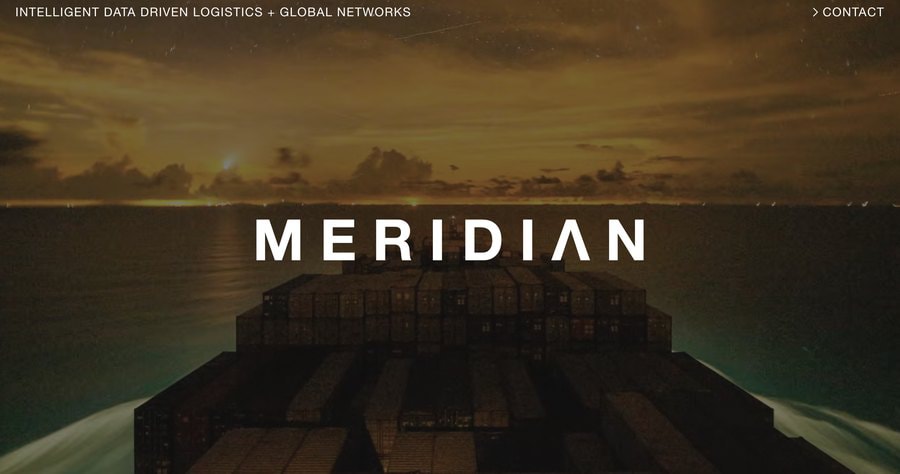
Halcyon Insurance wanted retrieval-grounded drafting of underwriting rationales — useful only if every statement it produced could be traced back to the policy document it came from.
The kind of work that needs a team that stays: the evaluation suite, the guardrails and the retrieval quality are not built once, they are tuned continuously as the corpus and the questions change.
Read case study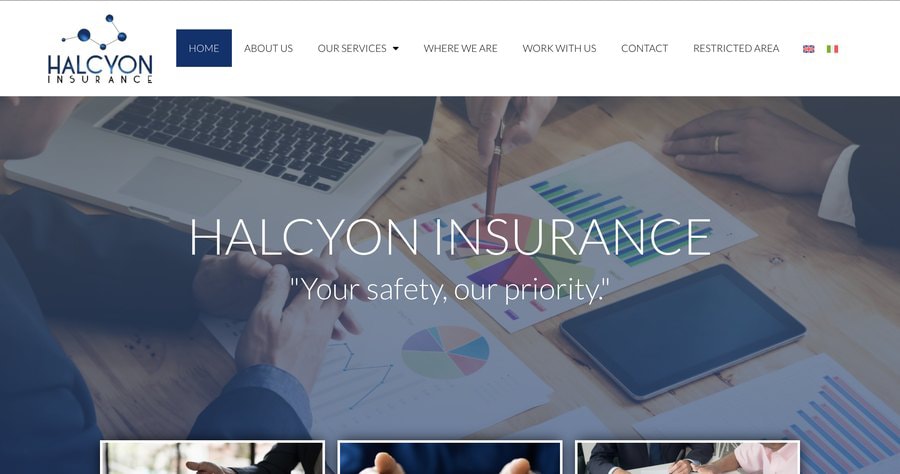
Silver Jeans Co. runs customer accounts, order tracking, a loyalty programme and a resale channel. Each held part of the customer; none of them agreed on the whole.
Salesforce work that continues past go-live by design — three platform releases a year means configuration, integrations and reporting all need someone who was there when the decisions were made.
Read case study
Three failure modes account for most disappointing pod engagements. Select one to see how we handle it.
Occasional notes from the people doing the work.
No newsletter cadence to promise yet — we write when there is something worth saying, and you get it in your inbox when we do.
Pods are staffed with principals and staff engineers. There is no pyramid underneath quietly doing the work, which is why a small SysStacks team is usually compared against a much larger one.
The questions we are asked most about dedicated development team — how it is priced, who owns what, and when we would tell you to pick a different model.
From the work, not from a template. We look at the roadmap and propose a shape — typically a tech lead plus engineers, with design or data specialists where the backlog needs them. You meet everyone before they start and can say no.
Yes, with notice — usually a month either way, so we can plan rather than scramble. Scaling up takes as long as finding the right person; scaling down we would rather do gradually so knowledge transfers instead of evaporating.
You set priorities; the tech lead owns technical direction and delivery. Most clients treat the pod as one of their own teams, using their board and ceremonies. If you would rather we ran delivery management too, we can — but you keep the roadmap either way.
That is our problem to absorb. We aim for an overlap so the replacement learns from the person leaving, and because context lives in documentation and pairing rather than one person, a departure is a slowdown rather than a hole.
With a guaranteed overlap window agreed at the start, and asynchronous habits for everything else — written decisions, recorded demos, and a board that tells the truth without requiring a meeting to interpret.
Yes, from the first commit, in your repository and your cloud accounts. Nothing about this model creates a dependency on us other than the people, and even that is mitigated by writing things down.
Long enough to be worth it. Ramp-up is real, and a pod that leaves before it has learned your systems has spent your money on its own education. We will be direct about whether your timeframe justifies this model or whether a project engagement fits better.
Frequently. We start with a technical assessment and an agreed stabilisation period before adding features, because taking ownership of an unfamiliar codebase and promising velocity in the same week is how teams end up misleading each other.
Tell us about the roadmap and the gap in it. An engineer — not a sales rep — replies within one business day.